


Myths of sovereignty and hopes for post-Referendum unity
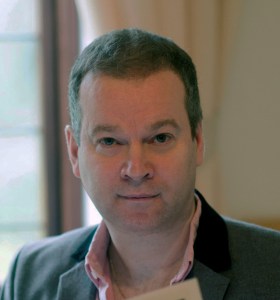
Adrian Hilton is a political theologian, educationalist and commentator on politics, religion, culture and the arts.
There is Theology – the immutable laws; the inviolable principles; the absolute articles of faith and doctrines of morality by which we discern the nature of God and his purposes in creation. And then there is Praxis – the lived reality of our flawed humanity, struggling to live the Christian life in a muddled and murky world of community compromises and accommodations of imperfection.
A faith that obsesses about matters of law is dead in its rituals: a living faith starts with “I believe in…”, and then reflects on the nature of that belief and seeks an authentic, organic expression of that belief in community.
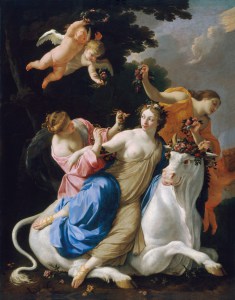
When it comes to the EU, I don’t look to the theo-political letter of the law in the Treaties – for they contain all manner of assurances of subsidiarity, solidarity, fraternity, wellbeing and prosperity. No, I look at the praxis – the reality of how the European Government secures the necessary social change and ensures its objective of “ever closer union”. Examine the political actions and utterances of the unelected and immovable oligarchs, for there you may discern why the mythical Europa rides the political Bull; and why the European Union is not, never has been and never will be the same as Europe. Don’t believe me: just ask the Greeks.
“I believe in Europe..” is the beginning of every question and the end of every answer when issues relating the European Union are discussed – as if an artificial political construct of 28 states were derivative of or synonymous with ancient notions of Christendom or the contemporary family of European nations of around 50 states. Are the 22 independent European states which are not in the EU any less European for not being so? Are they really all xenophobic, insular and self-regarding?
I have participated in a total of 21 EU Referendum church debates. Some have been a delight, and some quite dire. I’ve spent six hours travelling to speak to an audience of 14 (no expenses offered), and 15 minutes travelling to speak to an audience of several hundred (generous expenses freely given). I drove 200 miles to find myself lauded as a prophet (always dangerous), and 50 miles to be told by the minister that they weren’t expecting me and didn’t need me (I shook the dust off my feet). I saw all the email correspondence relating to that booking, but really couldn’t be bothered to address the incompetence and discourtesy. I wouldn’t expect to be offered expenses in such circumstances, but a glass of water would have been nice. I have formed opinions on the most and least hospitable denominations. The Baptists win hands down. It wouldn’t be very Christian to shame the worst.
 Over the past few months, Remain Christians have told me that I’m “peddling myths”; indulging in “crass populism”; “lying” which (I was graciously reminded) “isn’t Christian”; and that my desire for controlled immigration is “really about blacks and Muslims”. In each case, these slurs have come from Christian academics – professors and doctors – one of whom (with his knighthood) was very fond of reminding the audience: “I’m an academic, so I look at the facts” (the inference being… oh, never mind). Most Remain Christians have been kind and attentive to a robust exchange of views, but rather too many talk about Leavers as though we are one step removed from pederasty.
I didn’t mind Sir Simon Hughes telling me that I’m “wrong.. false.. deluded.. incorrect.. bogus” on the question of parliamentary sovereignty, because he was half right in his apprehension of what he thought I’d said. I couldn’t quite tell if he was being purposefully earless. Of course Parliament remains sovereign insofar as it could repeal the European Communities Act 1972 whenever it wished to do so. The point is that EEC accession has bound successive parliaments in certain important matters of governance: if the only way to effect a trivial change in legislation such as the repeal of VAT on domestic fuel or the tweaking of immigrant welfare rules is to secede from the EU, you begin to understand why the aversion to the nuclear option becomes a constraint upon democracy and a challenge to accountability, and so the sovereignty of the people is abated. Whatever happened to subsidiarity?
Sovereignty is replete with paradoxes: it is not absolute, for we live in a constitutional monarchy (sovereignty shared) under God (sovereignty supreme) and elect our representatives for a period of five years (sovereignty delegated), during which time they are omnipotent (see ‘under God’). Theology aside (and pace AV Dicey), Parliament isn’t entirely sovereign in its omnipotence either, for it is bound by certain Acts of Union 1706-7 (that is, the written constitution of a shared political framework) which restrict UK politicians in what they may do in Scotland with regard to (for example) its church and system of law. The UK Parliament cannot ride roughshod over certain Scottish institutions without abrogating the Acts of Union: the supreme sovereignty of the Westminster Parliament is, indeed, a myth, unless ‘unalterable’ no longer means ‘unalterable’.
 The world is changing, and quoting Dicey doesn’t quite cut it. Each incremental piece of legislation or regulation from Brussels does not remotely challenge the sovereignty of the UK parliament because i) that parliament is not sovereign; and ii) those who constitute that parliament have consented to every piece of EU legislation and regulation. What is challenged in some shape or form is the sovereignty of the people. When we cannot vote to change agriculture policy, fishing policy, financial regulation, remove VAT, change welfare (etc., etc.), it doesn’t quite cut it to shout ‘Club rules’. When a British citizen can be arrested here and extradited to languish in a Greek prison for months – no corpus juris; no trial by jury; not even a hearing conducted in his own language – it is the ancient rights and liberties of the freeborn Englishman that are denied. What does that have to do with an economic community?
I have listened to and considered carefully what every Remain Christian has told me over the past few months: principally that we must remain to reform the EU; we must somehow make it better, more responsive and more democratic. But I have not heard any Remain Christian set out how we may achieve that.
My hopes for post-Referendum Christian reconciliation are not as remote as those of the Rev’d Marcus Walker are for Tory unity. He is (justifiably) exasperated by Conservatives who impugn the integrity and motives of other Conservatives.
I have been exasperated by bishops and other clergy who have suggested that my personal motives and political objectives are xenophobic, racist, self-regarding and, in the final analysis, un-Christian. Such judgments wound, but they are not so deep – as they may be in the Conservative Party – that it becomes impossible to conceive of unity being restored. ‘So we, being many, are one body in Christ, and every one members one of another…’ But there are undoubtedly some churches I wouldn’t want to visit again, and doubtless others which would never want to see me again. My, how these Christians love one another…
But love we must, and be reconciled before the sovereignty of the Cross, where partisan posturing pales into utter inconsequence.
About the author
Adrian Hilton is a political theologian, educationalist and commentator on politics, religion, culture and the arts. He is a former parliamentary candidate and policy adviser to ministers and shadow ministers. He is founder and editor of the award-winning eponymous blog ‘Archbishop Cranmer’, and has also written for ConservativeHome, The Spectator, Guardian and Daily Mail. He lectures in the UK and the US on politics and philosophy, and holds a Guinness World Record. Most recently, he founded ‘Christians For Britain’ which he co-chairs with the Rev’d Giles Fraser – “praying for EU sense.. preparing to leave”.

They rejected His statutes and His covenant which He made with their fathers and His warnings with which He warned them And they followed vanity and became vain, and went after the nations which surrounded them, concerning which the LORD had commanded them not to do like them.
2 Kings 17:15
“Woe to the rebellious children,” declares the LORD, “Who execute a plan, but not Mine, And make an alliance, but not of My Spirit, In order to add sin to sin; Who proceed down to Egypt Without consulting Me, To take refuge in the safety of Pharaoh And to seek shelter in the shadow of Egypt!”
Isaiah 30:1-2
[B]ut they continually mocked the messengers of God, despised His words and scoffed at His prophets, until the wrath of the LORD arose against His people, until there was no remedy.
2 Chronicles 36:16
Why do you ignore the treaties? They set out the aspirations and intentions of the EU. The “praxis” may fall short of these aspirations but they are not easy to fulfil and sometimes the achievement of one can have a negative effect on another. You don’t forget the treaties when you want a stick to beat the EU “Whatever happened to subsidiarity?”
Who are these ” unelected and immoveable oligarchs” who run Europe? Mrs Merkel, President Holland, Prime Minister Renzi, David Cameron etc etc are all elected heads of state and government and they, with a neutral chairman to find a consensus, set the strategic goals. As for EU laws they are made by elected ministers and elected parliamentarians. All of which Adrian Hilton knows full well but he ignores so that he can build on the common misunderstanding about the role of the Commission.
Of course the EU is an “artificial political construct of 28 states ” It was created for specific purposes (see the treaties) and 5 of the European countries outside are at various stages in trying to join but still have to reach the criteria . These include democratic and judicial issues as well as economic ones (Copenhagen criteria) This fact should not give the UK a reason to leave the EU but suggests instead a reason why people who share the aims of this “construct” should want the UK to work harder from within to make it work better.
No Madam!
They are the five presidents that run the show - European Commission President Jean-Claude Juncker, together with the President of the Euro Summit, Donald Tusk, the President of the Eurogroup, Jeroen Dijsselbloem, the President of the European Central Bank, Mario Draghi, and the President of the European Parliament, Martin Schulz.
Five Presidents’ Report sets out plan for strengthening Europe’s Economic and Monetary Union as of 1 July 2015
This is a plan , not a decision just like any plan or programme suggested by the European Commission. The people who decide whether to adopt a plan and if so how are the heads of state and government. ( who are all elected)