


Europe’s unfinished journey to an unknown destination
Faith and scepticism have always figured prominently in the debate about the EU’s past.
Eight years ago, on 25 March 2007, the EU’s leaders celebrated the 50th anniversary of the Treaty of Rome at a meeting in Berlin. The Declaration which Chancellor Merkel and her colleagues issued at the end of their deliberations was not unimpressive. European unification had ‘made peace and prosperity possible’ and, thanks to the EU, the people of Europe had been able to develop ‘a unique way of living and working together’.
This high minded language was not agreed without difficulty however.
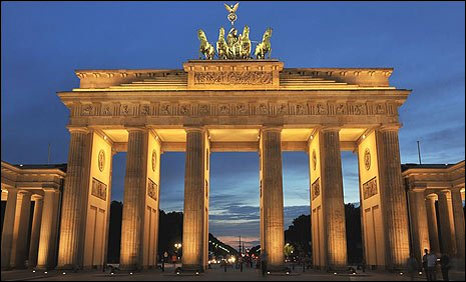
Lech Kaczynski, the Polish president, was decidedly uneasy about subscribing to it and was only persuaded to do so after a remarkably direct appeal by the German Chancellor. Taking her Polish colleague by the arm she led him to the Brandenburg Gate which, she reminded him, had been closed to her and her contemporaries when she had lived and worked in East Berlin as a younger woman ‘This is what it’s all about,’ she said. Kaczynski, who had his own memories of the days before 1989, was clearly moved and when the two leaders returned to the meeting room a few hundred metres further up Unter den Linden he dropped whatever reservations he had had.
 Appeals to fundamentals will and should loom large in the British debate about Europe over the coming months. The issues at stake are big and basic and a nation of shopkeepers, not to mention shopkeepers’ daughters, needs to be reminded just how fundamental they are.
It would nevertheless be regrettable and unwise if the pro-Europeans came to rely solely or even mainly on reminders of ‘what it’s all about’. Sixty five years since the Schuman Declaration of 9 May 1950, the EU has a complex and rich history which, like the histories of the member states on which the Union is based, cannot and should not be cabined and cribbed in generalisations and myths, however comforting they may be.
The Schuman Declaration which, still more than the Treaty of Rome, is the Union’s birth certificate was short but remarkable. It was both revolutionary and realistic, practical as well as visionary. It proposed the pooling of sovereignty. The scope of the project was nevertheless limited.
Europe will not be made all at once or according to a single plan. It will be built through concrete achievements which first create a de facto solidarity.
 Jean Monnet, its principal author, was not particularly disturbed when, within a very few years, some of the most cherished assumptions of the Declaration’s federalist supporters were turned upside down, not least in and by the Treaty of Rome. René Mayer, Jean Monnet’s successor as president of the High Authority, the forerunner of the European Commission, wrote in his diary in March 1957 that the Rome Treaty marked the death of supranationalism: the Council, composed of representatives of the member states, rather than the Commission was now the single most powerful institution.
Monnet saw things differently however. Far from subverting the objectives of the Declaration, the new Treaty was a new stage in a complex process which would continue to be driven forward by the European institutions, which the Treaty of Paris, the legal consummation of the Schuman Declaration, had created. The process was what mattered in other words. The destination remained unknown.
The narrative which has unfolded since the Schuman Declaration is rich and instructive. It is not a story of the triumph of good over evil or of consistency over inconsistency. There have been twists and turns, low points as well as high ones. At least four general conclusions would however appear to be relevant in the present context.
Firstly, the process has fundamentally altered the way in which European governments and peoples deal with one another.
Secondly, as Monnet always assumed they would, the EU’s institutions have succeeded in creating a magnetic field, the influence of which is apparent in more and more policy areas and into which more and more countries have been drawn.
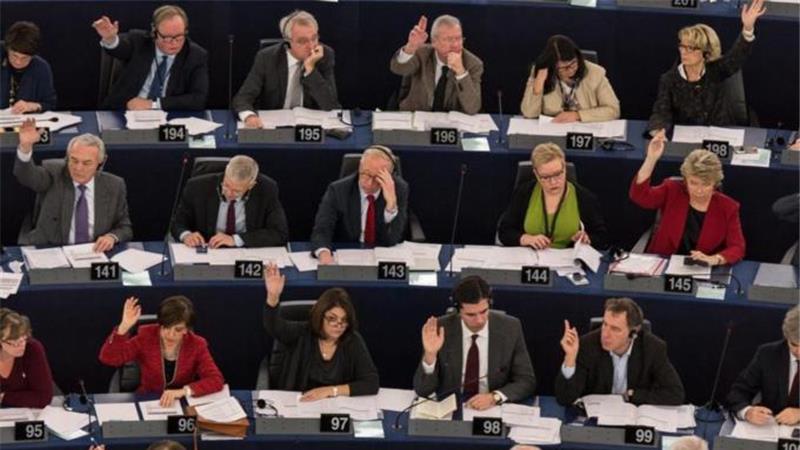 Thirdly, the vulnerability of countries, rich as well as poor, which are not party to this decision-making process, is considerable and uncomfortable. Alternative arrangements, whether multilateral, as in the European Economic Area, or bilateral, in the case of Switzerland, have contained but not offset the significant losses of sovereignty which non-membership entails, and the governments and voters of the countries concerned have been faced with an ongoing struggle to maintain, let alone enlarge their margin for manoeuvre.
Fourthly, and arguably most important of all, the political system which has emerged since 1950 is flexible but not brittle, dynamic but at the same time deeply rooted in multiple agreements reflecting the complex interests of numerous member states over six decades. To imagine that it can be significantly remoulded or even toppled at the behest of a single member state is therefore dangerously naïve.
Europe’s destination is still unknown. A British decision to opt out of the process through which 27 other European states have already chosen to pursue their journey and which at least five others would like to join, would however involve a leap of faith of even greater magnitude than the one which the Six made sixty-five years ago.
About the author
Peter Ludlow is the chairman of EuroComment and co-chairman with Antonio Vitorino of the European Strategy Forum. After fifteen years teaching International History in the University of London and at the European University Institute in Florence, he was Founding Director of CEPS (the Centre for European Policy Studies) in Brussels from 1981 to 2001. He has written and edited numerous books and articles on international history and European integration and has since 2000 been the privileged but non-official historian of the European Council.
 Loading ...