


Whirling festivals of peace
Alison Elliot - Centre for Theology and Public Issues at New College, School of Divinity, University of Edinburgh
An important part of my European identity is that I can lay claim to the cultural and artistic riches of the continent. Bach and Mozart, Klimt and Rembrandt, Ibsen and Chekov, all are part of the heritage that has shaped me. And every year, that treasure chest bursts open on my doorstep, courtesy of the Edinburgh International Festival.
The Festival started in 1947 as an exercise in post-war reconciliation. There are moving accounts of its final concert, when the Vienna Philharmonic Orchestra, reunited with its exiled conductor, Bruno Walter, played the Blue Danube, with tears streaming down their cheeks.
Every year since, orchestras, dancers and theatre companies from across the world mingle and exchange ideas in a stimulating programme. Indeed, one of the Festival’s clichés is a classic from one country performed by actors from another, in a translation into a third language, both to celebrate the underlying universality of good art and to point up the nuances possible when it is owned by people from different cultural traditions.
T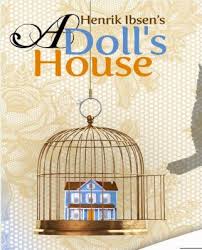 here’s a danger that this kind of art takes refuge in a rarefied canon of classics that either reflect froth from a privileged society in the past, or pieces that were revolutionary in their time but have lost their edge through familiarity. But Festival audiences are looking for something more substantial than that and they are seldom disappointed.
Innovative productions draw out hidden dimensions in a play, like the time when the cast of A Doll’s House consisted of very tall women and very short men. Or creative programming can help you see old favourites in a new light, as in the concert last summer of short pieces written over three hundred years to commemorate battles and peace treaties in Europe.
For the Festival to continue to contribute to international peace and reconciliation, it needs to keep pushing boundaries and to remember that art often serves people best when it emerges from tension and complex circumstances.
In 2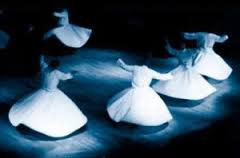 008, the programme sought out art on the edges, with a play originally written for South London performed in Bosnian by school students from Sarajevo and with a programme of religious music that included songs from Corsica and Georgia, music for the Whirling Dervishes ceremony and illustrations of the different traditions of Gregorian chant that clashed in a politically fuelled conflict in the 9th century. This year, there is a new Irish opera about assisted suicide alongside more classical depictions of suicide in a new translation of Sophocles’ Antigone.
The reach of the Festival goes beyond Europe, but the core offerings are, understandably, European.
As we begin to explore the political configuration that Europe might take in the future, it does well to remember the cultural language that underpins the continent and its history. It’s a language that has many dialects but one through which people can share their hopes for a peaceful resolution to the complex challenges that face us, whatever country we come from.
About the author
Alison Elliot’s work engages with the university, civil society and the church. Formerly a lecturer in cognitive psychology, she is currently an Honorary Fellow and Associate Director at the Centre for Theology and Public Issues at New College, School of Divinity, University of Edinburgh. In 2004 she became the first woman to be appointed Moderator of the General Assembly of the Church of Scotland. She was Moderator of the General Assembly of the Conference of European Churches in 2009, having represented the Church of Scotland on its Central Committee for 12 years. She has been Convener of the Scottish Council for Voluntary Organisations and is a Trustee of Volunteering Matters. She was a member of the Commission on the Future Delivery of Public Services in Scotland (the Christie Commission) and has chaired a review of land reform for the Scottish Government. She holds a OBE and is a Fellow of the Royal Society of Edinburgh.

We already know the political configuration of the EEC, it will continue as a extremely corrupt dictatorship.