


Postcard from Switzerland
- 2016-06-02
- By ReimaginingEurope
- Posted in Postcard from..., Potter
On 5 June the citizens of Berne will be asked to vote on no fewer than eleven referenda, five on federal and six city matters, ranging from amendments to the Asylum Act to the building of a new primary school. The previous referendum was in February and included votes on a second Gotthard tunnel and radical changes to the tax laws.
The Swiss are very attached to their system of direct democracy. The federal system enshrines subsidiarity and so decisions on many matters are taken at the level to which the measure applies. Citizens of other countries may envy the Swiss but nevertheless - and even some Swiss will admit this - there are also drawbacks to government by referendum. It can be a crude way of making important decisions. By definition it can only produce one of two answers: Yes or No, whereas many questions require a more nuanced response, especially if they are about complex issues. For this reason the question is often reduced to its lowest common denominator or is framed in tendentious or emotive language. An example was the vote to impose quotas on the immigration of EU citizens, which contravened Switzerland’s treaties with the EU and led to sanctions being imposed.
One often hears people say that a question is too complicated for them to understand what they are being asked to vote about. Perhaps for this reason voter turn-out can be less than thirty percent. A simple majority, even if only a fraction of one percent, is all that is required for an issue to be carried or rejected. This means that a decision can actually be taken in accordance with the stated views of barely 15 percent of the population.
Vox populi, vox Dei? Not necessarily.
About the author
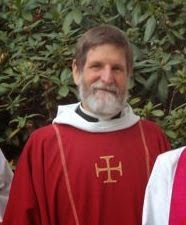
Peter Potter is the Anglican Archdeacon of Switzerland and Chaplain of St Ursula’s, Berne. He was born in Northern Ireland. Before ordination he worked as a translator for the Dutch Government. He was ordained in 1985 and held posts in Salisbury and Chester Dioceses as well as the Scottish Episcopal Church, before moving back to the Diocese in Europe in 2008.

Sir
‘An example was the vote to impose quotas on the immigration of EU citizens, which contravened Switzerland’s treaties with the EU and led to sanctions being imposed.’
I say! On the one-hand you sign a treaty with the EU and on the other when the EU doesn’t like the results of what it agreed to: imposes sanctions! Now we know something of the wickedness that lurks in the corridors of Brussels.
We’ve got something similar going on Britain. The Labour MP Keith Vaz and Chairman of the Home Affairs Select Committee (and an EU supporter to boot!) was complaining that Britain’s jails are full of criminals not from Europe but from EU countries. Upon their release he cannot understand why Britain is failing to ‘deport’ them back to Poland and Rumania (for example). Before he became an MP he was a lawyer.
British lawyers predicted that because Britain’s criminal justice system was better than eastern EU countries, criminals in those countries would make cost-benefit calculations as to which EU country was favourable commit crime in. They chose Britain.
Now to the question of why Vaz is confused about the failure to ‘deport’. He believes (like those in the Remain camp) that as Britain is in the EU then it would be easy to ‘deport’ criminals back to their ‘home’ countries in the EU.
What he and the Remain camp are blind to is this: the EU is their home country and therefore they cannot be deported.
It works like this by using the example of another federal country the USA. If you have a burglar in New York who commits burglaries in California and gets caught – after release he cannot be ‘deported’ back to New York as he is a citizen of the USA. Upon release he has a right (as a citizen of the USA) to reside in California.
When a Rumanian commits the murder of an aged couple in Britain, after serving his sentence, he has a legal right to remain in Britain (the EU).
There is now another debate raging over another aspect of the EU. The British are fond of their National Health Service (the NHS). The increase of EU citizens in Britain have stretched the resources of the NHS to breaking-point. This morning on the news an NHS worker said that people are being left on trollies in Accident & Emergency wards and paramedic teams are looking after them whilst waiting for a doctor (six hours) to treat the patient. At the same time these paramedic teams’ function to race to the scenes of injured and dying citizens is on the brink of collapse.
It is obvious that the Remain camp have to tell the long-suffering British at what point they are prepared to terminate the health and justice systems. It’s a question that not even the Christians who are supporting the Remain side dare even contemplate – but nevertheless have to answer sooner rather than later.
Now can we at least have answers from the Churches of England and Scotland as to when (because the present situation cannot go on - something has to give) they will flick off the switches on peoples lives, limbs and pleas for justice?
Mr Singh, wouldn’t the NHS be in an even worse state without the doctors, nurses, care workers, porters, who come from other EU countries particularly from Poland, Czech Republic, Bulgaria, Romania to work in the UK?
No. There are likely to be reciprocal arrangements at least in the short-term.
http://www.theguardian.com/small-business-network/2016/mar/29/would-brexit-make-harder-hire-eu-workers-referendum
In the long-run the British have to make strategic decisions about producing more doctors and nurses as well as reducing the unemployment queues.
What’s important is that the British decide the issues - not the Eurocrats.
Mr Singh,
Why does Britain have a shortage of British trained doctors and nurses, a care sector that is overwhelmingly staffed by foreigners, an enormous shortage of houses and a primary and secondary education that is short of teachers ? All these are situations created by successive British governments. The free movement of people, which is a fundamental principal of the EU’s internal market has helped fill some of these shortages along with immigration from the Commonwealth but your hostility to the EU and veneration of British decisions seems illogical.
‘an enormous shortage of houses and a primary and secondary education that is short of teachers ?’
Because, Madam, demand exceeds supply. If you want to feed and house the world - then lobby the government to borrow more billions (and then more). And do advise your grandchildren and their children that it is they who’ll have to pay of the debt.